EN
EN  NL
NL  DE
DE 
- News
- Water-efficient neighbourhoods (2)

Manifesto on Water-Efficient Neighbourhoods presented to the House of Representatives: “Prevent drinking water congestion”
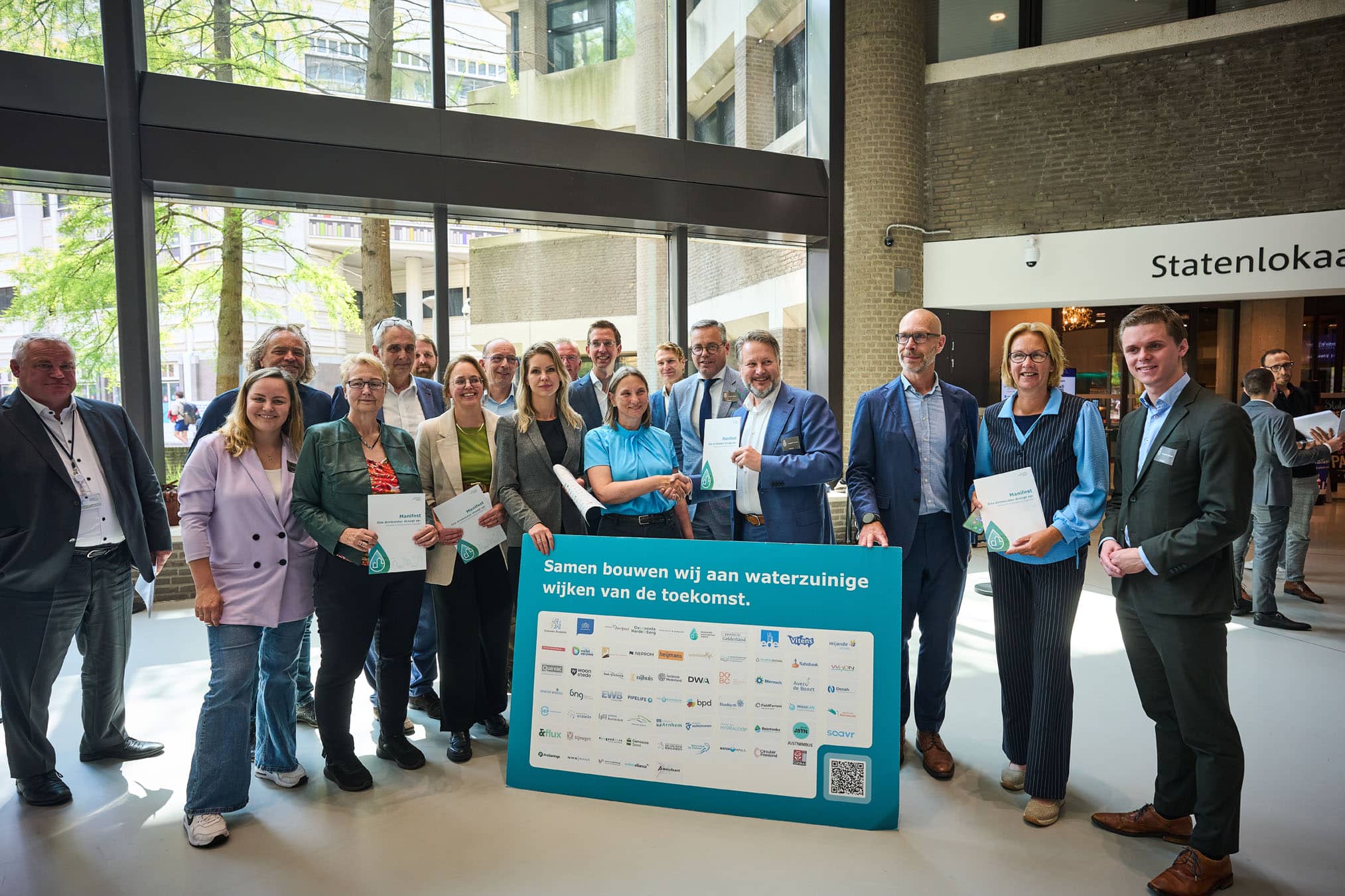
On Tuesday 16 June, the “Water-Efficient Neighbourhoods” Working Group presented the manifesto entitled ‘Prevent drinking water congestion’ to the Members of the House of Representatives sitting on the standing committees on Housing and Spatial Planning, and Infrastructure and Water Management.
Desah endorsed this manifesto as one of the 63 Public and private organisations are calling for action: accelerate the introduction of drinking water conservation – the reuse of treated rainwater and wastewater – in buildings, with clear rules and safeguards for public health. In this way, we can prevent drinking water shortages and ensure that new homes continue to have a secure supply of drinking water in the future.
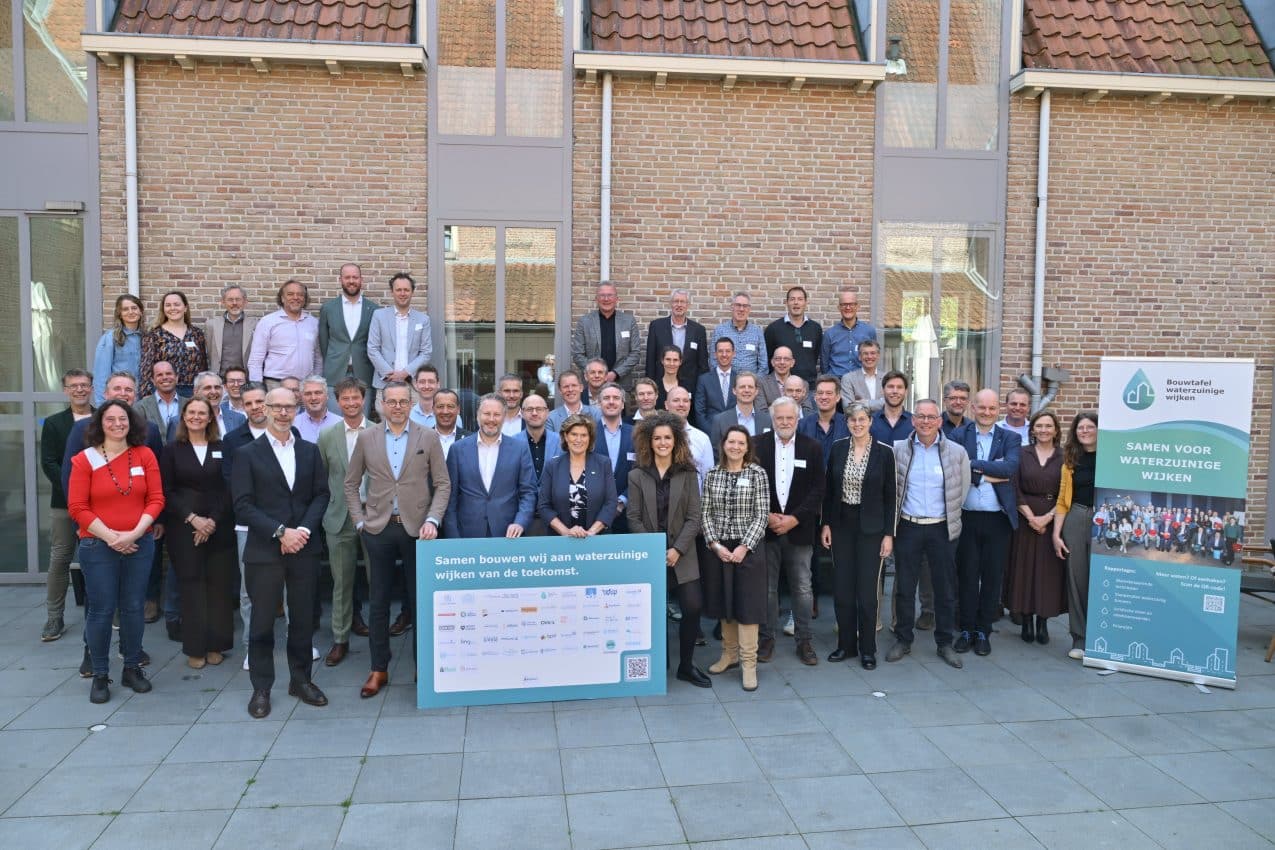
The Water-Efficient Neighbourhoods Construction Forum is a broad partnership between government bodies, trade associations and companies from the water, construction and building services sectors, which is working towards a sustainable and scalable model for water-efficient construction in the Netherlands. By sharing knowledge and gaining practical experience, the initiative is working towards a future of water-efficient construction in accordance with a national standard.
Rising demand for drinking water
Climate change, population growth and the construction of 900,000 new homes by 2030 are causing demand for drinking water to rise sharply. According to forecasts, an additional 100 million cubic metres of drinking water will be needed annually by 2030. At the same time, available production capacity is under pressure.
Martijn Dadema, a member of the Overijssel Provincial Executive and chair of the Water-Efficient Neighbourhoods Construction Working Group, presented the manifesto to the House of Representatives: “Drinking water is in danger of becoming the next major network bottleneck. Yet the solutions are already available: from water-efficient sanitary facilities to the reuse of treated rainwater and wastewater. What is needed now is a clear national strategy, so that water-efficient construction becomes the norm rather than the exception.”
It’s already possible: evidence from real-world practice
There are already many promising projects underway across the Netherlands. In Silvolde, the water board, the local council, a housing association and construction firms are working together on circular water use in 28 new homes, where shower water, treated wastewater and rainwater are reused. In Venhuizen, the reuse of rainwater via tanks fitted with filter systems has led to a reduction in drinking water consumption of between 48 and 92 per cent. In the Blitseard neighbourhood, greywater systems in 15 households are reducing drinking water consumption by 300,000 litres per year. And in the Noorderhoek neighbourhood, wastewater from 207 homes has been treated locally since 2011, with black and grey water collected and treated separately.
The Netherlands doesn’t need to reinvent the wheel either. In Flanders, rainwater harvesting has been compulsory in new-build properties since 2004. The result: an average of 84 litres of drinking water consumed per person per day, compared with 119 litres in the Netherlands. Clear regulations work.
Five specific calls to the House of Representatives
The Round Table on Water-Efficient Neighbourhoods calls on the House of Representatives to:
- to speed up the implementation of the National Action Plan on Drinking Water Conservation, with sufficient funding and central government oversight
- to develop a national ‘Water-Efficient Housing’ Guideline as a clear framework for local authorities, housing associations, developers and builders, with safeguards for public health
- to evaluate the directive in pilot neighbourhoods where solutions are being tested in practice
- to enshrine drinking water conservation and the safe reuse of water in legislation and regulations, with lasting safeguards for public health
- to facilitate the infiltration, storage and reuse of rainwater so that water remains available locally
The aim is to reduce drinking water consumption in new homes from 119 to a maximum of 90 litres per person per day. The technology is already available. Now the regulations need to catch up.
“Would you like to find out more about the solutions Desah can offer to tackle drinking water congestion? Please feel free to contact on, then we will discuss the possibilities.”